Visual Art
Visual art forms the foundation of Shatha Al Hsani’s artistic practice. Working primarily through realism as her visual language, she approaches painting as a means of research and visual inquiry, exploring themes of identity, memory, culture, philosophy, and the complexity of modern society.
Her artistic practice began in childhood, while her earliest documented body of work dates back to the age of eleven, reflecting more than two decades of continuous artistic development. Each project is grounded in a research-led process that precedes execution, integrating historical, cultural, and literary investigation with visual analysis to produce works that combine technical precision with conceptual depth.
This section presents a curated selection of Al Hsani projects and .artworks
Salamiya 2025 Oil on Canvas, Augmented Reality
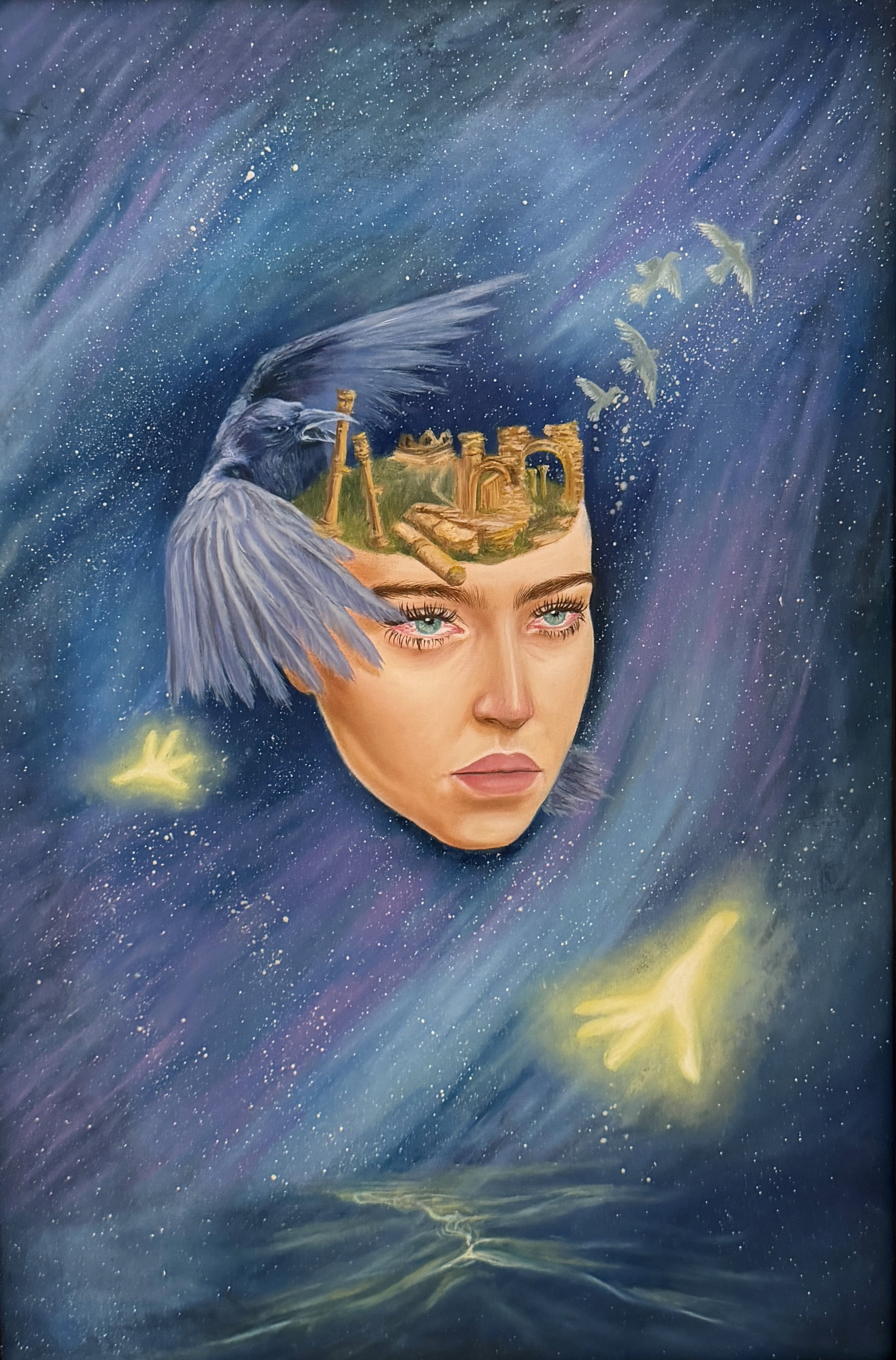
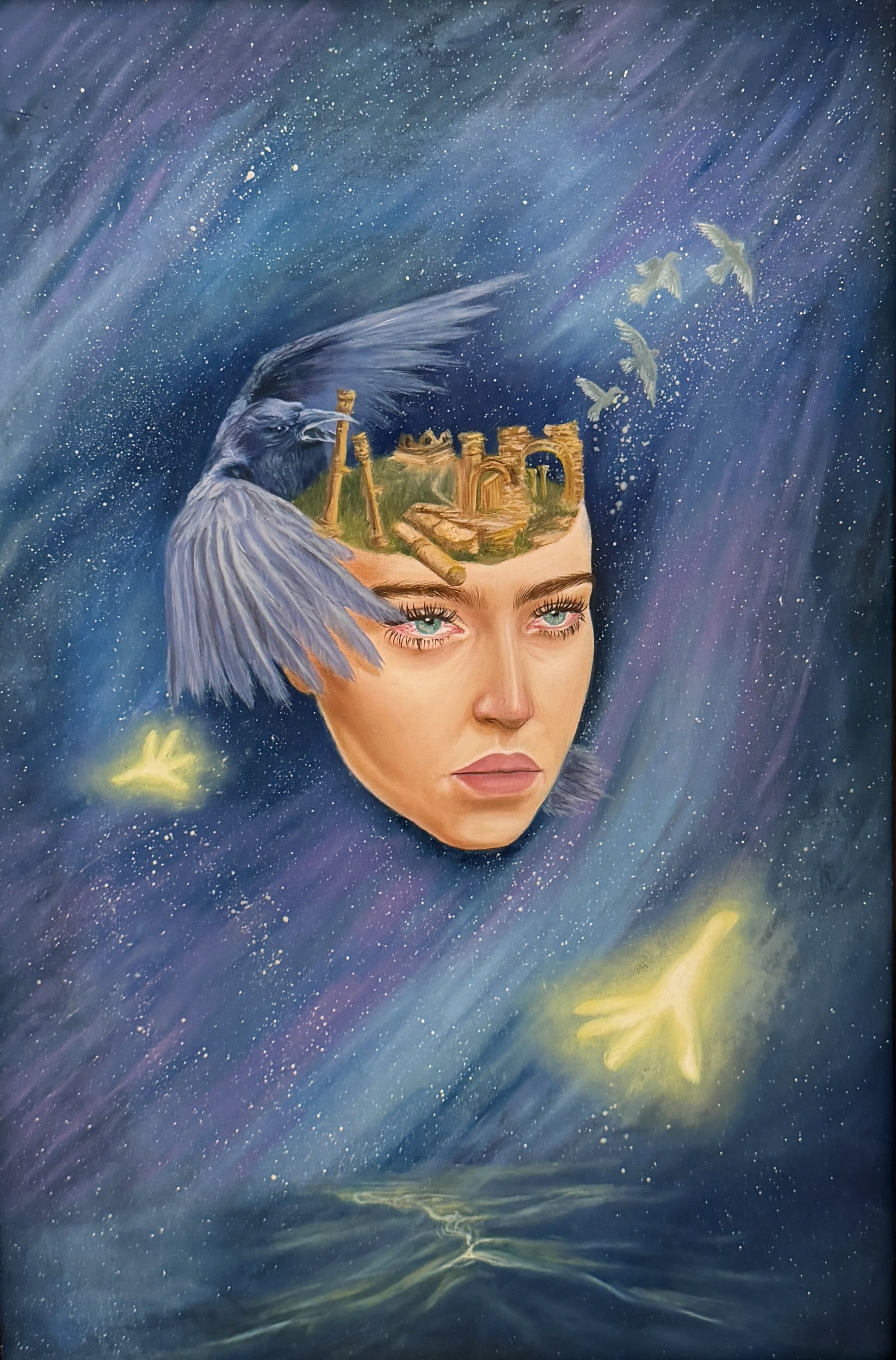
Inspired by Salamiyah, the poem by Syrian poet Mohammad Al-Maghout, this work does not seek to illustrate the text, but rather to reinterpret it through an independent visual language. The poem, written as an elegy to the poet’s hometown, becomes the point of departure for an exploration of memory, loss, and cultural continuity.
Within the composition, Salamiyah as an entity that is simultaneously a woman and an isolated planet, suspended in darkness, carrying its architectural heritage as both memory and burden. Raven emerge as metaphors for destruction and colonial violence, while white birds evoke displacement and exile. The stars transform into distant hands reaching toward what remains, and the tears below becomes an ocean, absorbing fragments of history before they disappear into oblivion. Together, these elements construct a visual narrative that extends beyond the literary source while preserving its emotional and philosophical resonance.
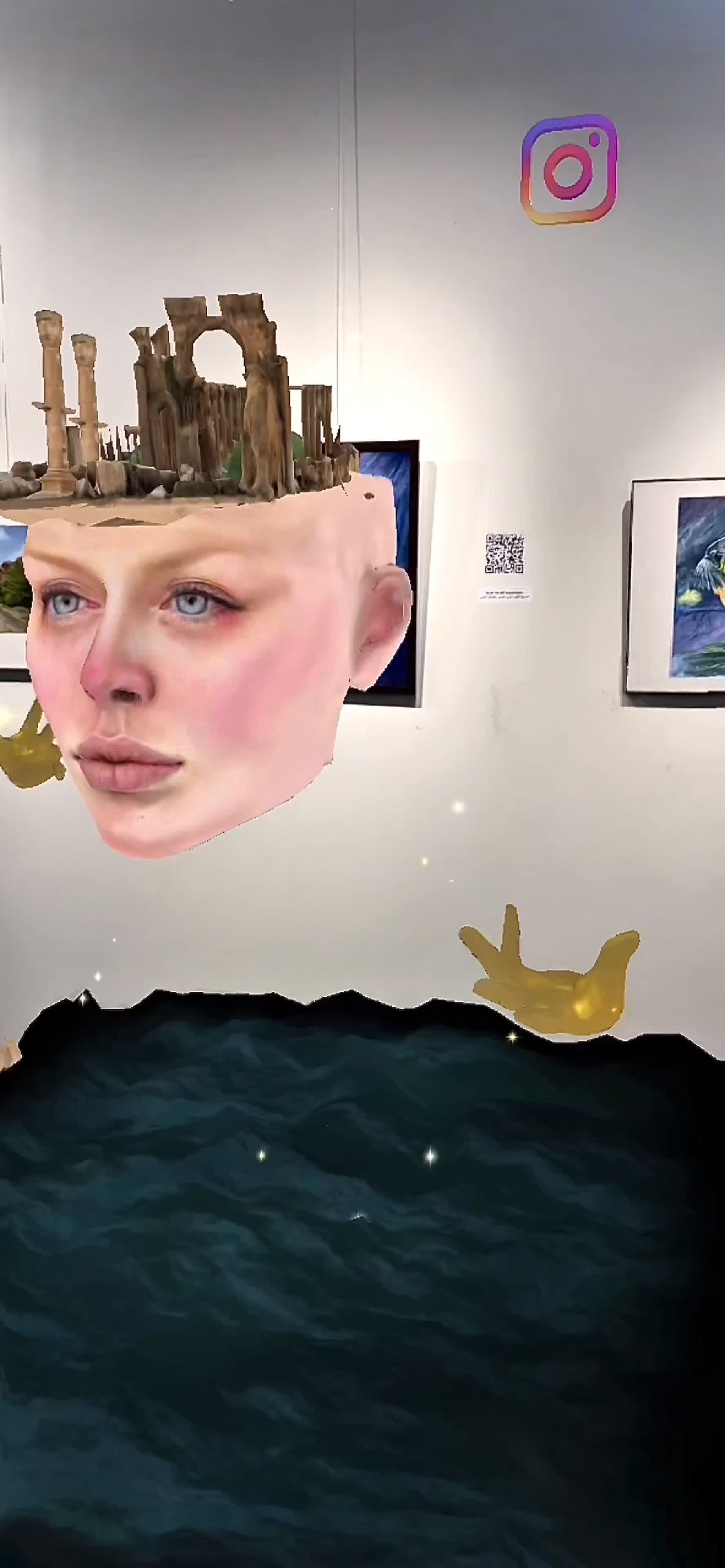
Presented in the final exhibition of the Academic Foundations of Fine Arts Workshop, the project marked the first realization of Shatha Al Hsani’s long-term interest in integrating digital media into her artistic practice. Rather than functioning as a technological addition, augmented reality forms an integral part of the work’s conceptual structure, extending the painted image into an interactive spatial experience through a self-developed three-dimensional model and animation.
Salamiyah reflects an interdisciplinary practice in which painting, literature, and digital media converge, expanding the possibilities of contemporary figurative art while maintaining a sustained commitment to research, craftsmanship, and conceptual inquiry.
TRANSCENDENCE 2025Oil on Canvas, Augmented Reality
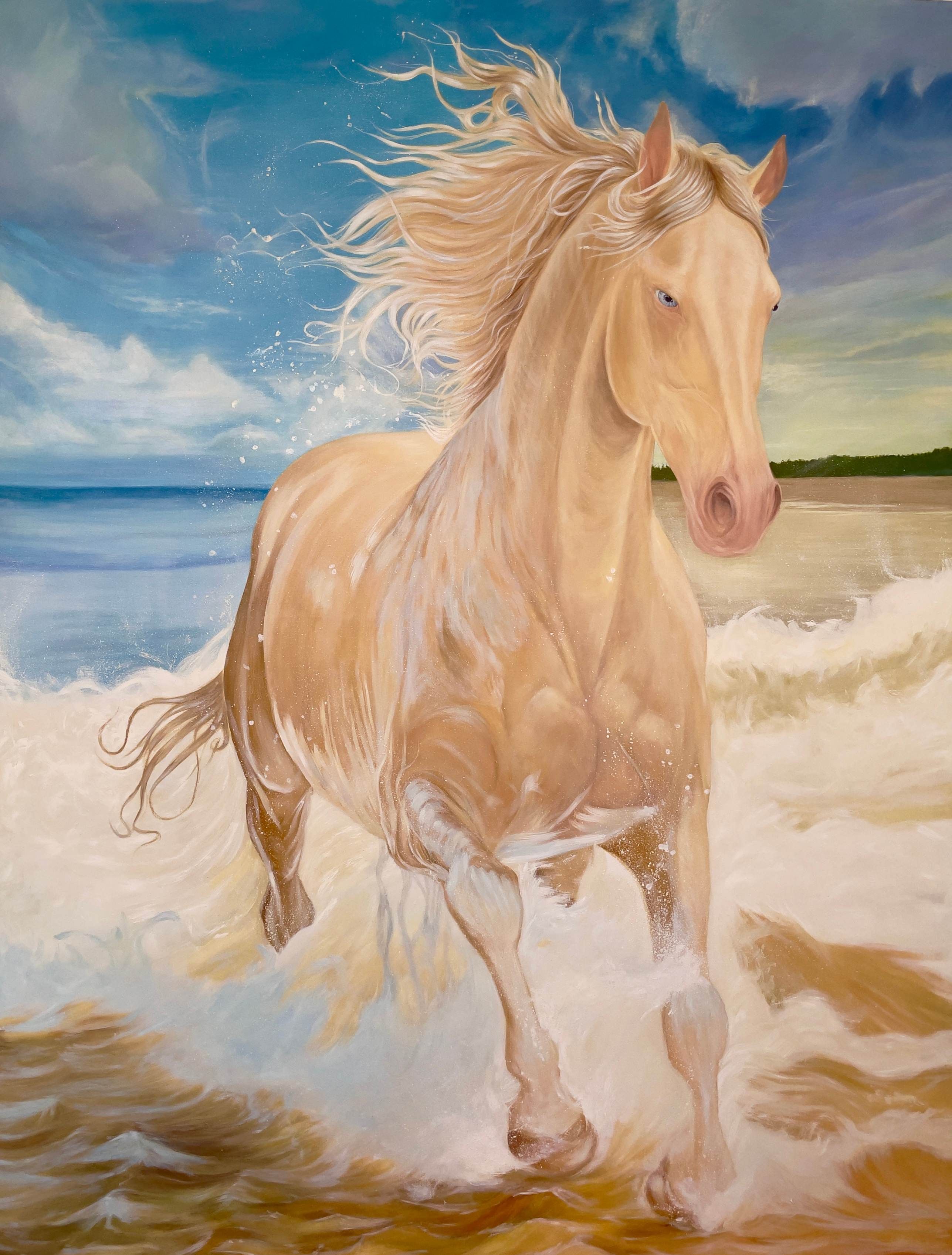
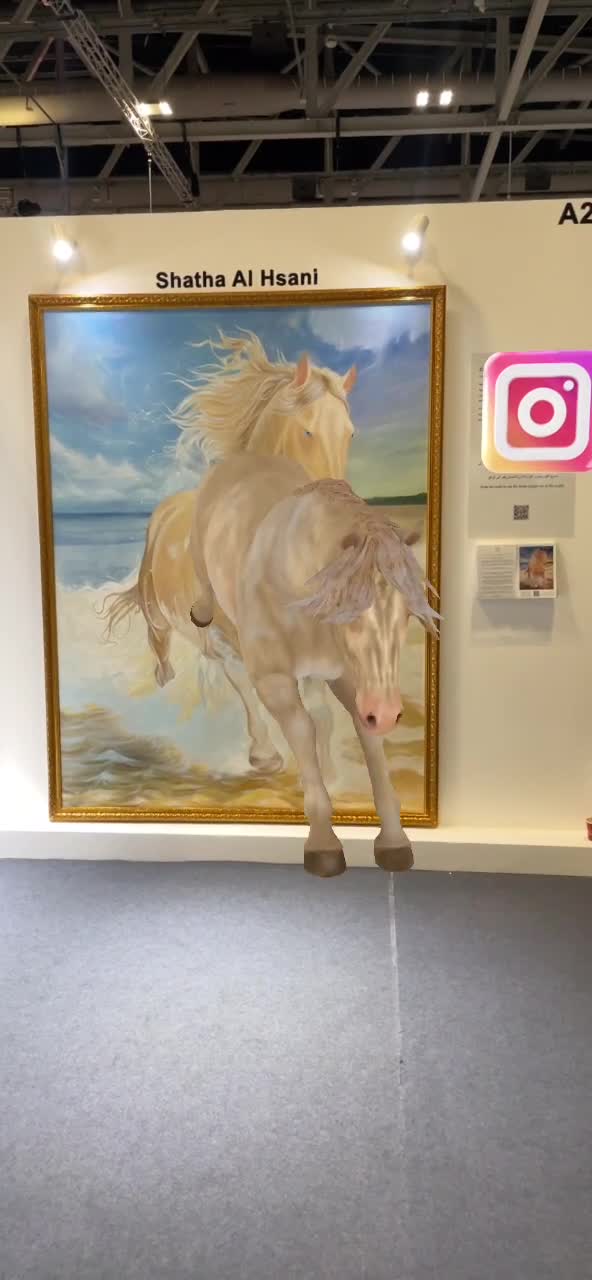
Centred on the Akhal-Teke horse, one of the world’s oldest and most distinctive breeds, this work examines the figure of the horse beyond its historical and anatomical presence, approaching it instead as an ontological entity and a metaphor for the human condition.
The horse’s leap beyond the painted surface operates as a metaphysical gesture that resists confinement within the limits of representation. Emerging from the canvas through augmented reality, it transcends the traditional boundaries of painting and enters the viewer’s physical space, dissolving the distinction between image and reality.
The sea, defined by its depth, darkness, and uncertainty, becomes a symbolic landscape of the hidden structures that shape human experience. Within its restless waves accumulate fear, inherited belief systems, intellectual constraints, and existential burdens. From this landscape, the horse’s leap unfolds as an existential act of transformation—a passage from the weight of imagined limitations toward liberation, and from the confines of the frame into a realm beyond time and space.
Developed through the integration of oil painting, three-dimensional modelling, digital sculpting, animation, and augmented reality, the project forms part of Shatha Al Hsani’s ongoing investigation into expanding the language of painting through contemporary technologies. Within this work, digital media does not replace the painted image, but extends its conceptual and spatial presence.
Portrait of Al Sayyieda Ahad Al Said 2025Oil on Canvas
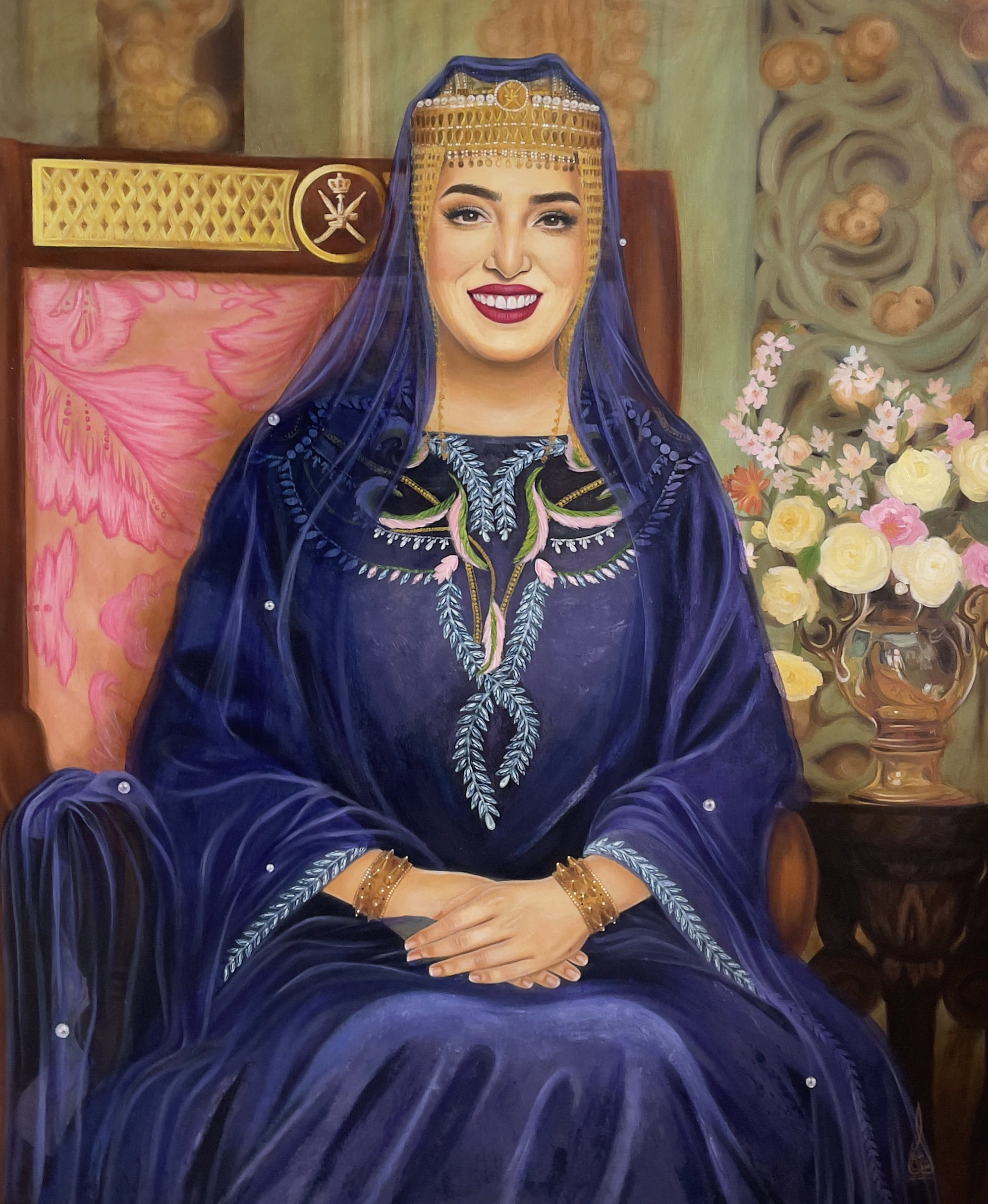
Created for the Ishraqat Ahd Art Forum, this portrait presents Her Highness Al Sayyida Ahad bint Abdullah Al Busaidiyah through a contemporary interpretation grounded in historical research, visual analysis, and Omani cultural identity.
Rather than reproducing an existing image, the work was developed through an extensive study of royal protocol, traditional Omani dress, jewellery, symbolism, and gesture. The composition introduces a newly designed Dhofari ensemble, conceived specifically for the portrait as a tribute to Oman’s cultural heritage. Rendered in a blue-violet palette, the garment evokes dignity and refinement while reinforcing the ceremonial character of the composition.
The headpiece was designed exclusively for this work, drawing upon the visual language of royal crowns while incorporating pearls, diamonds, and the Omani national emblem to acknowledge Her Excellency’s position. Together with a carefully considered posture and restrained body language, these elements construct a portrait that balances realism with symbolic representation.
Presented during the Ishraqat Ahd Art Forum, the work reflects Shatha Al Hsani’s broader artistic practice, in which portraiture is approached as a form of cultural research, combining technical precision with historical reference and contemporary visual interpretation.